Our first week in France, we heard about and saw multiple protests and strikes throughout Grenoble. In the following two months, protests and strikes became almost a normal occurrence, with students protesting outside of the DLST and handing out flyers, a group of teachers striking and blocking the tram from getting to campus effectively cancelling our classes one day, and news of other manifestations in Grenoble and around the country.
In France, la manifestation is an integral part of French culture. We were told that even when the French recently began to celebrate Halloween, it took the form of a sort of protest parade, with kids in costume marching down the street and demanding candy from shops.
While protests are common in France, they are still effective in bringing about social and political change. The French have a long history of protesting for what they believe in, and it has shaped the country’s policies and national identity in a way that is centered on the people and having a high quality of life.
Similarly, protests have been instrumental in U.S. movements throughout history, where the country’s fight for independence was spurred on by the Boston Tea Party protests against unfair taxation. The Civil Rights Movement led by Dr. Martin Luther King Jr. is one of the most famous examples of protests in the United States, though protests have been utilized to fight for many causes before and since then.
In recent years, protests against Trump, for women’s rights, for gun control, and against ICE and the treatment of immigrants have made national news. With such a large nation, with many individual communities, it’s hard to unite a national identity and movement like the French have. As such, nationally organized protests are often difficult to achieve and struggle to produce effective change in policies.
Most recently, two contradicting protests in response to the handling of the COVID-19 pandemic have exemplified divisions in the U.S.
At the end of March and into early April, workers at Instacart, Amazon, Whole Foods, and other essential businesses went on strike to protest a lack of protective equipment, hazard pay, and accessibility to sick leave in the middle of a pandemic. Though the protests were in the news at the time, they quickly disappeared from the media, and it is unclear whether or not they were effective in securing the necessary changes needed to protect employees who must continue working.
Theoretically, large-scale strikes and walkouts should force companies to discuss and implement solutions that improve worker’s conditions. However, many Americans find it difficult to participate in strikes or long-term protests due to financial concerns and fear of losing their job. The companies cannot function and turn a profit without the workers, but workers cannot earn enough to put themselves in a position to both provide for themselves and fight for better conditions.
In a stark contrast to worker’s striking for the right to stay home and protect their health, this week many have taken to the street to protest government-mandated quarantine and social distancing. Constituents in states where governors have imposed strict stay-at-home orders have formed Facebook groups ‘against excessive quarantine’ where they discuss the supposed governmental overreach and authoritarian nature, and organize protests.
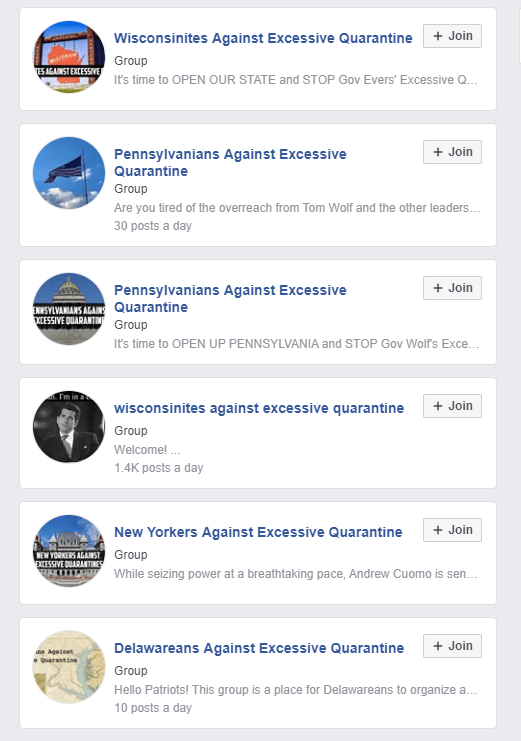
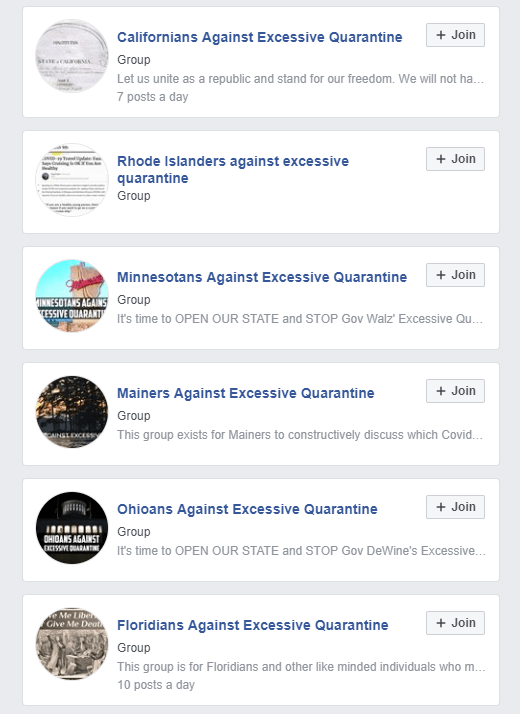
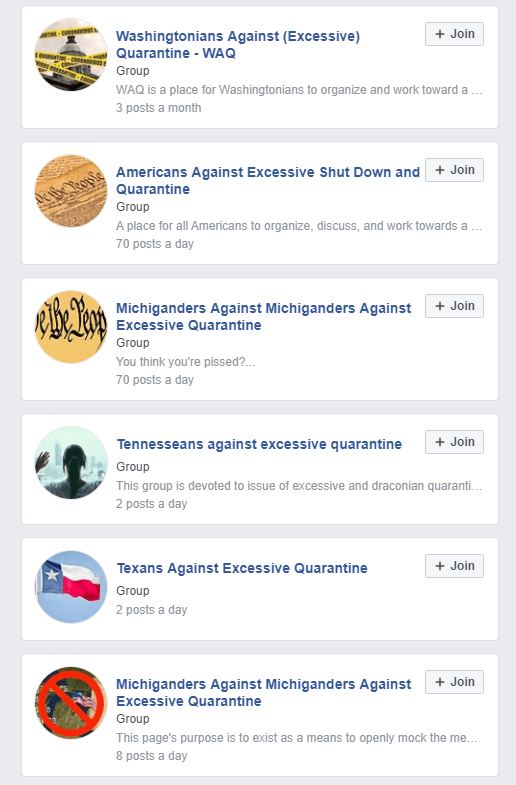
It seems as if the recent movement is a vocal minority of the country, where Pew Research Center has published polls relating to COVID-19 that show the American people–both Democrats and Republicans–generally approve of their state official’s handling of the crisis, though there is a clear partisan split on Trump’s handling of the crisis. The motivation for these protests supposedly stems from the feeling that citizens’ personal freedom has been stripped, and that “keeping healthy people at home” infringes on basic American rights.
Given the severity of the crisis, these protests are unlikely to push governors to ease restrictions at the moment, though they may pressure officials to work towards a relatively soon and swift ‘reopening’.
In France, it seems that protests have disappeared from the political landscape for the time being, save for worker strikes against Amazon and other companies to demand the right to stay home and protect themselves. Despite significantly stricter restrictions and controls nationwide compared to the patchwork of local and state orders in the U.S., the French don’t seem to feel as if their liberty has been unduly sacrificed for the security of the country.
American protests seem to be less common and significant than in France, and contradictions and counter-protests often inhibit movements from bringing about fundamental changes in company and government policies. Although I generally admire the French’s inclination to fight for what they believe in, at this difficult time it is not the time to mount protests and flaunt government restrictions, which the nation of France seems to understand, despite their love for protests.
 Julianna Hill